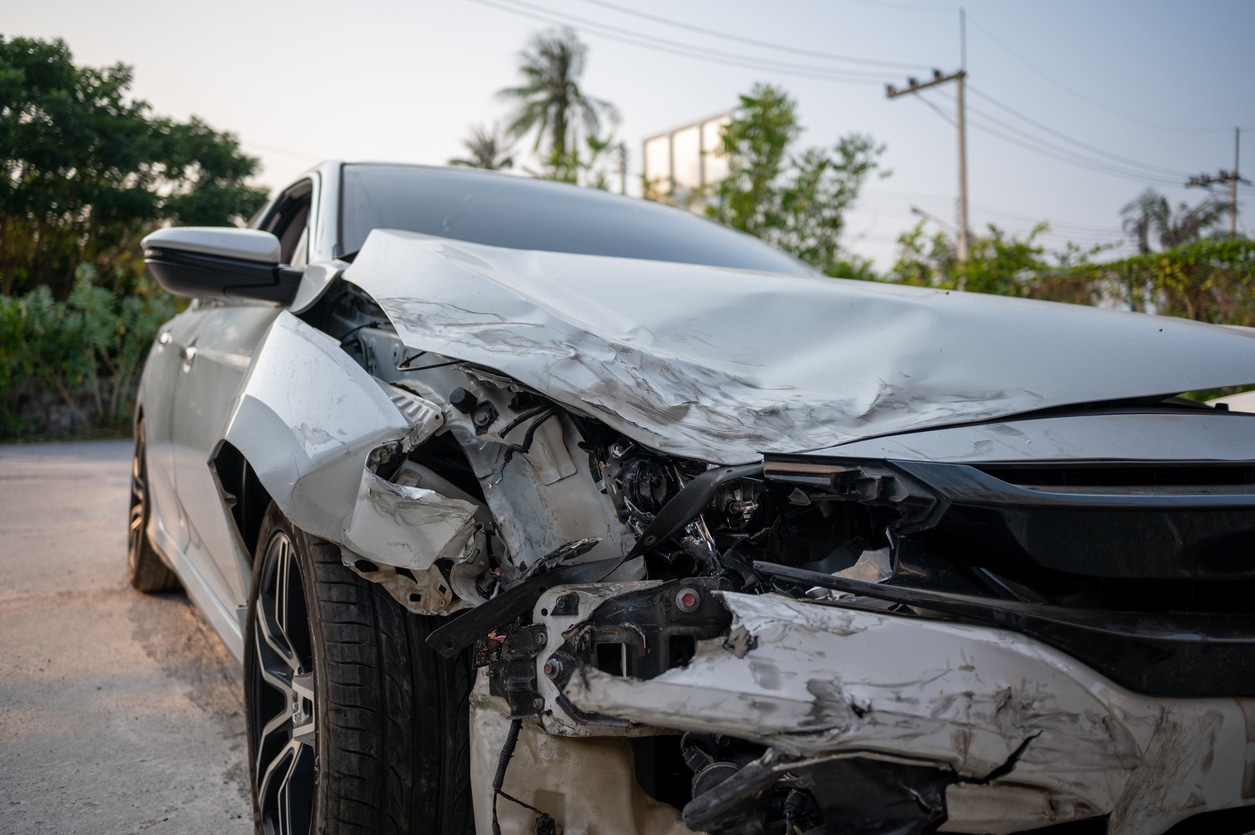
You can’t believe your ears. The other party is telling their version of events, and the car accident they are describing sounds nothing like the collision you lived through. Panic begins to rise as you worry the court will take their version and run with it.
Stop and take a breath. The police, insurance companies, and the court are well-versed in car accident aftermath. They know that everyone’s version of events will vary. This is why evidence is so important. It’s not about speaking the loudest, telling your story first, or being the most compelling. When an at-fault driver is lying about an accident in Florida, evidence can help establish what really happened and support your claim.
Key Takeaways
- Florida car accident claims must be validated with evidence, as the parties cannot rely on simply being first to share their version.
- It’s a crime under Fla. Stat. § 837.05 to lie to law enforcement about what happened in a crash.
- Lying to the insurance company about crash events is insurance fraud.
- Under Fla. Stat. § 837.02, lying during court proceedings is perjury.
- Third-party documentation can provide evidence to counter a false narrative.
- Florida’s modified comparative negligence rule allows fault to shift when false accounts go unchallenged.
Why the Other Driver's Story Doesn't Decide Your Florida Car Accident Claim
Courts don’t blindly believe the first person to share their account of events. Instead, courts rely on evidence to validate conflicting or competing statements. There is truth in the saying “there are three sides to every story: yours, theirs, and the facts.” While this can be tough to hear, there is also comfort in it. Providing false information can backfire for the other party, as the evidence can prove the facts to be different. Once this happens, the other party’s version of events, along with their credibility on future statements, is called into question.
When two parties are in court seeking damages for a car accident, the central focus is how fault gets assigned. Under Fla. Stat. § 768.81(6), if a party is found to be more than 50% liable for the accident, they cannot recover anything. When an at-fault driver is lying about an accident in Florida, this can incorrectly shift liability and prevent a party who should have been able to recover from doing so. This is why it’s vital to have the representation of a personal injury attorney who knows how to challenge false claims.
What Happens If the Other Driver Lies to Police About Your Crash
Lying to the police about a car accident is a terrible idea. Under Fla. Stat. § 837.05, it’s illegal to intentionally give false information to a police officer about an alleged crime. Getting caught the first time is a first-degree misdemeanor. For qualifying repeat offenders, criminal charges can be upgraded to a felony. In a car accident situation, this statute applies when the drivers involved are speaking to the responding officer. A driver would violate the law when they tell the officer events that they know are not true.
Don’t panic if you are realizing that you may have told the responding officer incorrect information. Not every inaccurate statement made to police officers is a crime. It’s not a crime for people to be mistaken or confused in their beliefs about what happened.
What Happens If the Other Driver Lies to Their Insurance Company
If an at-fault driver is caught lying about a car accident in Florida to the insurance company, they can face serious consequences. Under Fla. Stat. § 817.234, intentionally giving misleading or incomplete information is considered fraud. When these falsehoods are a part of your insurance claim, it’s a criminal offense.
This responsibility for truthfulness applies to everyone. So while it can be frustrating that the other party is telling falsehoods, do not stoop to their level with your own. The same scrutiny will be applied to your version of events. Having an accurate and well-documented account of events is essential.
Insurance companies will typically request an official recorded statement from the involved drivers. The Special Investigations Unit will take that record and compare it to the evidence. Any inconsistencies will be noted and addressed.
What Happens If the Other Driver Lies Under Oath in Your Case
An at-fault driver lying about an accident in Florida could be criminally charged for lying under oath during legal proceedings concerning the crash. However, this doesn’t mean that every false statement or account made will result in an arrest. Casual statements made at the accident scene are not made under oath. These don’t qualify as perjury.
Once the drivers make statements to the police or insurance company, they create an official record. That record can be used to impeach them and raise credibility issues later. This typically happens before actual perjury charges are raised.
Under Fla. Stat. § 837.02, the person making the false statement must know or believe that their statements are not true. For many, they believe that their version of events is what happened. This is why it’s so important to have evidence and to be careful when making official statements. Attorneys for both parties will look for contradictions and inconsistencies.
What Evidence Can Prove the Other Driver Lied About Your Crash
Drivers can use a variety of verifiable evidence to document the actual car accident events. Once independent third-party evidence is introduced, a false statement rarely holds up. Your attorney can use physical evidence to talk through the events leading up to, during, and after the accident. Each accident is different, so the available evidence can vary based on the circumstances.
Evidence in a car crash can include:
- Witness statements
- Police reports
- Photos and video from the scene
- Traffic, surveillance, or dashcam footage
- Event data recorder ("black box") data
Independent witness statements are valuable because they are an account from a disinterested third party. They do not have a stake in who prevails. They also weren’t involved, allowing them to have a clearer recollection of events.
Expert witnesses can also be crucial in a car accident case. For instance, accident reconstruction experts can collect data and document the scene. This can give attorneys the ability to present an accident reconstruction in court to show the jury how the accident occurred and which driver was at fault. An accident reconstruction expert can also help refute false claims about speed, establish the vehicles’ travel direction, and determine the point of impact.
Two important notes about gathering evidence. Timing is crucial, as it’s common for evidence to be overwritten. Many security systems and vehicle data recorders delete or record over old footage after a certain amount of time. This can happen within weeks or even days of the accident. Then, under the Driver Privacy Act of 2015, you may need the driver’s consent, a court order, or a subpoena to access the footage or data. These can take time to obtain.
How a False Account Could Affect Your Florida Car Accident Settlement
Not addressing a false account of your car accident can have very real consequences. The court may listen and recognize that false account as fact because no evidence has been presented to prove otherwise. That false account can successfully shift the accident fault away from the party making the false claims. Under Florida’s modified comparative negligence rule, that shift could mean you are more than 50% at fault for your own harm. Once that happens, your potential damages recovery isn’t just reduced; it’s eliminated.
That is why acting quickly is critical when an at-fault driver is lying about a car accident in Florida. You may want to counter the other party’s false account. However, if you wait too long to collect evidence, it may no longer be available to collect. A car accident attorney has experience collecting time-sensitive evidence.
Contact a Fort Lauderdale Car Accident Attorney
While it’s understandably frustrating to hear the other party lie about what happened, remember that evidence can help establish the facts and support your claim. Black box data, surveillance footage, and vehicle damage don’t lie. An experienced car accident attorney can gather evidence and prepare your arguments while you focus on recovering from your injuries. David I. Fuchs and his team know how to gather evidence and counter false claims made during car accident cases. Schedule a free consultation with a car accident lawyer by calling 954-568-3636 or visiting the contact us page.