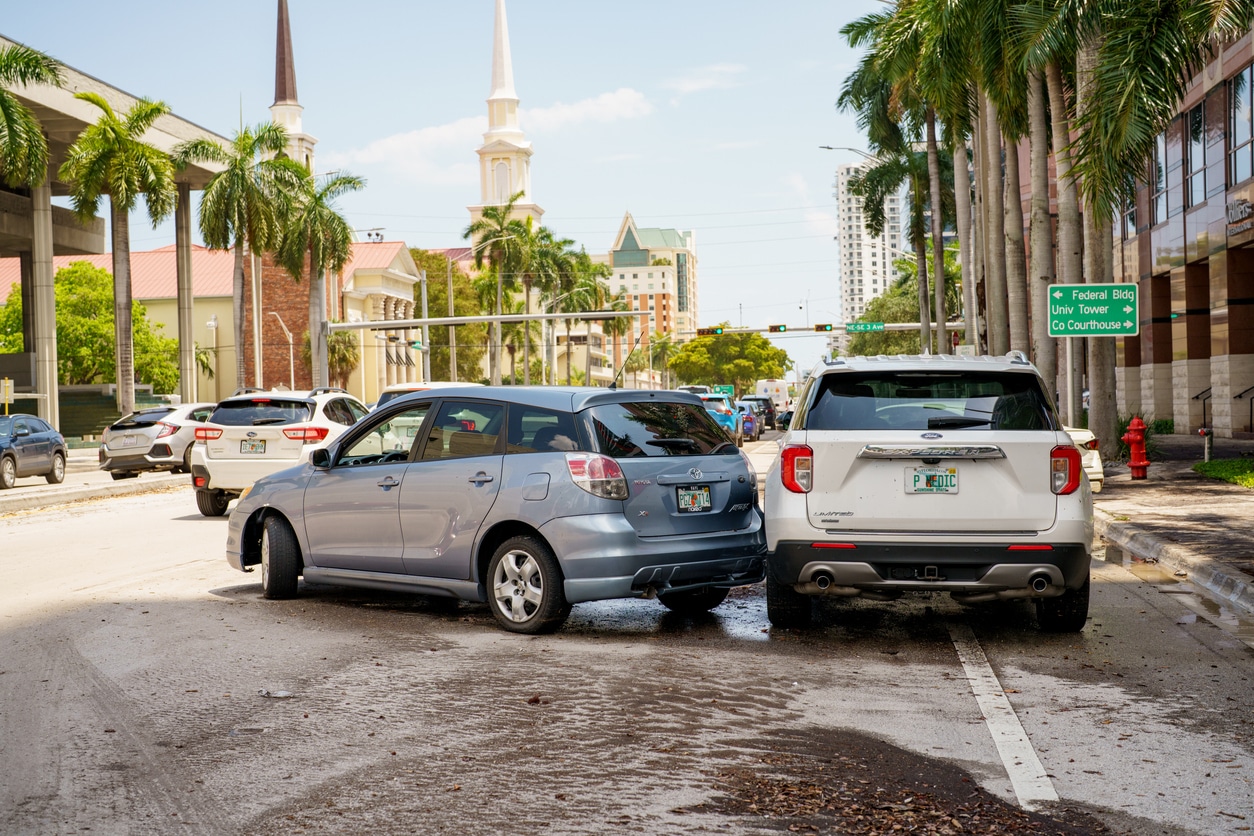
The moments after a crash are chaotic. Drivers exit their vehicles convinced that the other person caused the accident. They only discover later that the insurance company sees things differently. Questions about who is at fault in a car accident in Florida can quickly become the center of an injury claim. Florida’s accident laws can make fault far more complicated than people expect. Here’s what every Florida driver should know.
How Fault Is Determined in Florida Car Accidents
Under Florida law, “fault” is the person who is legally responsible for causing the accident. Determining fault is crucial because the person who is financially responsible for the damages caused by the accident. To establish fault, the facts and evidence are evaluated. More than one individual can be found at fault. Typically, fault is tied to negligence. One or more drivers failed to use reasonable care under the circumstances.
To establish fault, the key question is whether a driver’s careless or unlawful action directly contributed to the crash. Several entities must determine fault. The law enforcement officer who responds to the accident will evaluate the situation at the accident scene. Their prepared report will detail what happened, including tickets issued, witness statements, and vehicle damage. The officer won’t determine fault, but may issue traffic citations if appropriate.
The insurance company is usually the first entity to determine fault. The adjuster handling the claim will review the police report, photos, witness statements, and policyholder account. They must determine fault to calculate claim payouts or possible claim denial.
Personal injury car accident attorneys also must determine fault. However, they do it from the perspective of client representation. They gather and analyze evidence, including clinical records, video footage, expert opinions, and accident reconstruction. This information is used to advocate on behalf of the client to recover compensation for damages and injuries.
If a case cannot be resolved through negotiations or settlement, then it may proceed to a court trial. If this happens, a judge or jury will hear the parties’ arguments and make a determination. Florida law is to decide who was at fault and assign a percentage of responsibility if more than one party is involved.
Florida’s No-Fault Insurance Rules
Florida uses a no-fault insurance system. All drivers are legally required to purchase personal injury protection (PIP) insurance coverage. After an accident, each driver’s own PIP insurance covers a portion of their own medical expenses and lost wages. This is regardless of who is found at fault. A driver can still be found at fault for the accident and held liable for damages beyond PIP coverage.
What Is Comparative Negligence in Florida?
Florida uses a modified comparative negligence system to decide how compensation is shared when more than one person is at fault. In simple terms, your recovery can be reduced by your percentage of responsibility for the crash. If you are found partially at fault, your compensation is lowered accordingly, and if you are found more than 50 percent responsible, you may be barred from recovering damages altogether under Florida’s 51 percent rule.
This matters because insurance companies often look for ways to shift blame after an accident. Even a small percentage of fault assigned to you can significantly reduce what you receive for medical bills, lost wages, and other damages. That is why evidence and a strong legal strategy are often critical when fault is being disputed.
What Evidence Is Used to Prove Fault
Several types of evidence are used to determine fault. Having multiple types of evidence can help to create a strong case. The police report is crucial, as it creates an official third-party record from the accident scene. It will include driver and passenger statements, witnesses' statements, if citations were issued, and the officer’s observations. Photos and videos taken at the scene are also critical. Capture the vehicle damage to all vehicles involved, skid marks, vehicle debris, and injuries. Remember, injuries like bruising can take a day or two to fully appear. Request traffic or local business security footage if available. Make a copy of the dashcam footage.
Witness statements are helpful because they are independent third-party corroborations of a driver’s version of events. It can be difficult to track down witnesses weeks or months later. Collecting witness contact information at the scene is important to make contact later.
Medical records are useful for documenting injury claims. These records also connect the harm suffered to the events of the collision. This can help support a version of events that proves fault.
In especially complex accident cases, an accident reconstruction may be appropriate. An expert will use evidence and data to create a reconstruction of what happened before and during the accident.
Electronic evidence has taken a more prominent role in proving fault in recent years. Cell phone records and data can show if the driver was using the phone during the accident. Vehicle black box data can show metrics like speed, acceleration, braking, turning, and seatbelt status.
How Fault Affects Your Compensation
The fault determination directly impacts each driver’s ability to recover for their damages and injuries. Insurance companies use fault percentage during settlement negotiations. Payout offers are typically lowered for increased fault.
When a fault is debated, it can delay the resolution of an accident case. More research and investigation are required. This takes time. Settlement negotiations are delayed and may never come to a resolution. This can lead to a trial, which delays compensation further. This is why early action is vital. Evidence becomes harder to collect the more time that goes by.
Talk to a Car Accident Lawyer
Car accident claims in Florida often come down to one critical question: who is at fault in a car accident in Florida? While the answer may seem obvious at the scene, Florida law allows fault to be shared, disputed, and reinterpreted throughout the claims process.
The Law Office of David I Fuchs is committed to helping injured drivers and passengers protect their rights after a crash. They bring experience handling disputed liability cases and negotiating with insurance companies that often prioritize minimizing payouts.
Reach out today to discuss your case and get guidance on the next steps.